Last updated September 24, 2026
New windows and doors improve comfort, cut energy bills and add long-term value to your home. Sightline Windows & Doors Hobe Sound pairs proven product lines with our own installing crews for lasting performance - and a price we put in writing.
1. Choose your installer
The unit is half the job - the install is the other half. Our own background-checked crews measure, set, seal and insulate every opening, and they know the lines we quote inside and out because they install them every week.
2. Select the right products
Compare styles, materials and glass packages side by side until the fit is right for your rooms, your budget and your goals. The product-line comparison below is the place to start.
3. Prepare your home for install
Before install day we walk you through a short checklist - furniture pulled back, treatments down, a clear path to each opening - so install day is watch-it-happen, not scramble.
Compare the Lines We Quote
Every project is priced on the same lines, side by side - the price indicators below are relative, and your consultant shows exact numbers on your actual openings.
PGTThe line Florida homeowners arrive naming - the most Miami-Dade certifications in the industry$$$
- More Miami-Dade NOA certifications than any other line we quote
- WinGuard, EnergyVue and ClassicVue Max systems built for every wind zone
- 99% on-time delivery keeps your install date on the calendar
CGIThe heavyweight impact line$$$$$
- Large-missile impact ratings for the strictest wind zones
- Architectural-grade aluminum with commercial-depth frames
- The line we quote when protection is the whole point
CWSThe Florida value pick$$
- Vinyl systems built in Florida for Florida codes
- Strong energy packages at the friendliest price point
- The smart start for whole-home replacements on a budget
ESWSlim lines, big glass$$$$
- Narrow-sightline aluminum for modern elevations
- Oversized openings and floor-to-ceiling glass
- Impact-rated without the bunker look
ECOThe aluminum impact workhorse$$$
- Miami-built aluminum impact systems
- A strong price-to-protection ratio for coastal homes
- Proven inventory lines with short lead times
Window Installation Maintenance Checklist for Hobe Sound Homeowners
The Florida Building Code requires that impact-rated windows maintain their tested performance for the life of the unit, but a corroded sash track or degraded glazing tape can void that rating without any visible crack - a condition a standard visual inspection won’t catch. In Hobe Sound, where salt spray from the Indian River Lagoon and the Atlantic carries inland on easterly fronts, we’ve documented window failures at 18 months that manufacturers expected to reach 15 years in inland climates. This checklist is organized around the actual degradation timeline for coastal Martin County, not the generic seasonal schedules written for Phoenix or Atlanta.
Quick Answer
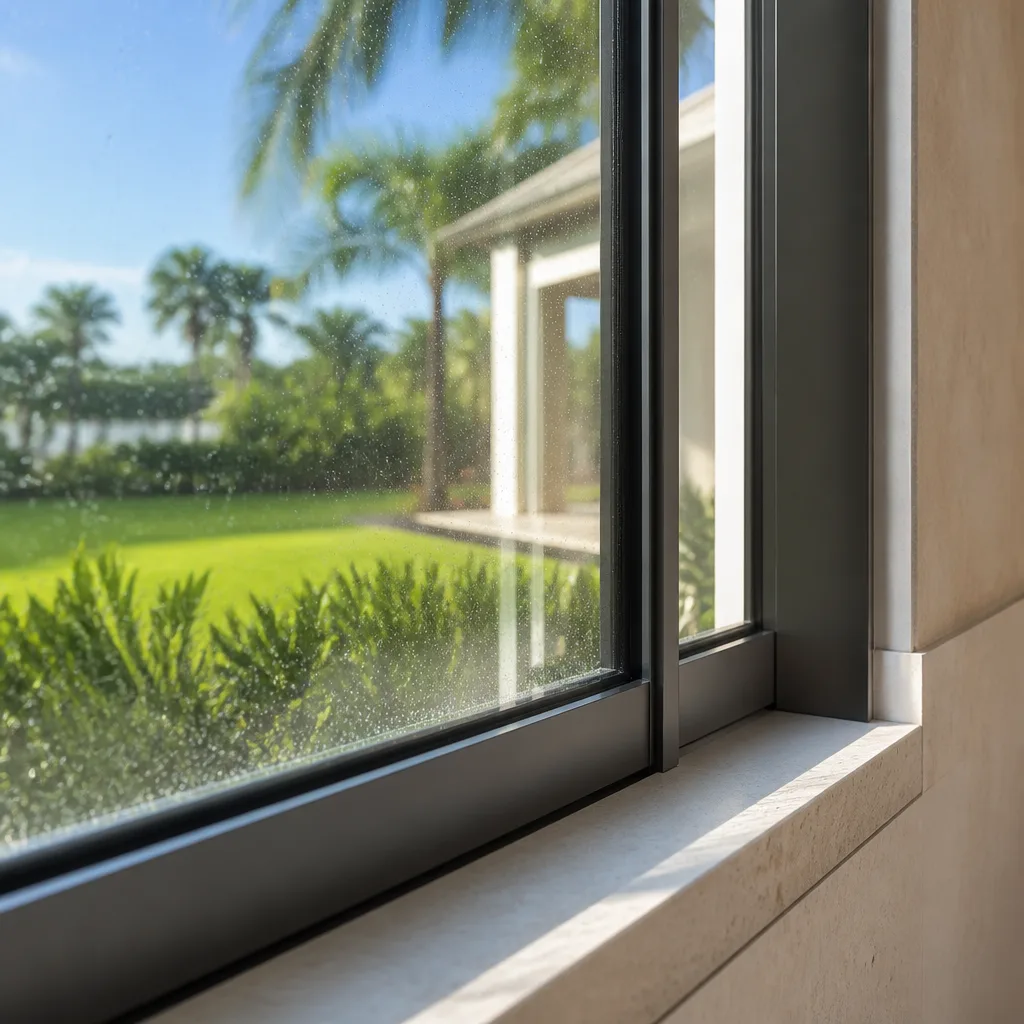
Hobe Sound homeowners should inspect windows every 6 months for weep hole blockage, salt buildup on hardware, and glazing tape shrinkage; perform deeper sealant and frame drainage checks at 2 years; and schedule a full hardware, glass, and structural review by year 5 in coastal conditions. Salt-air corrosion accelerates every failure mode by 40-60% compared to inland Florida, so the inspection intervals that work for Orlando or Tampa will miss early-stage damage here.
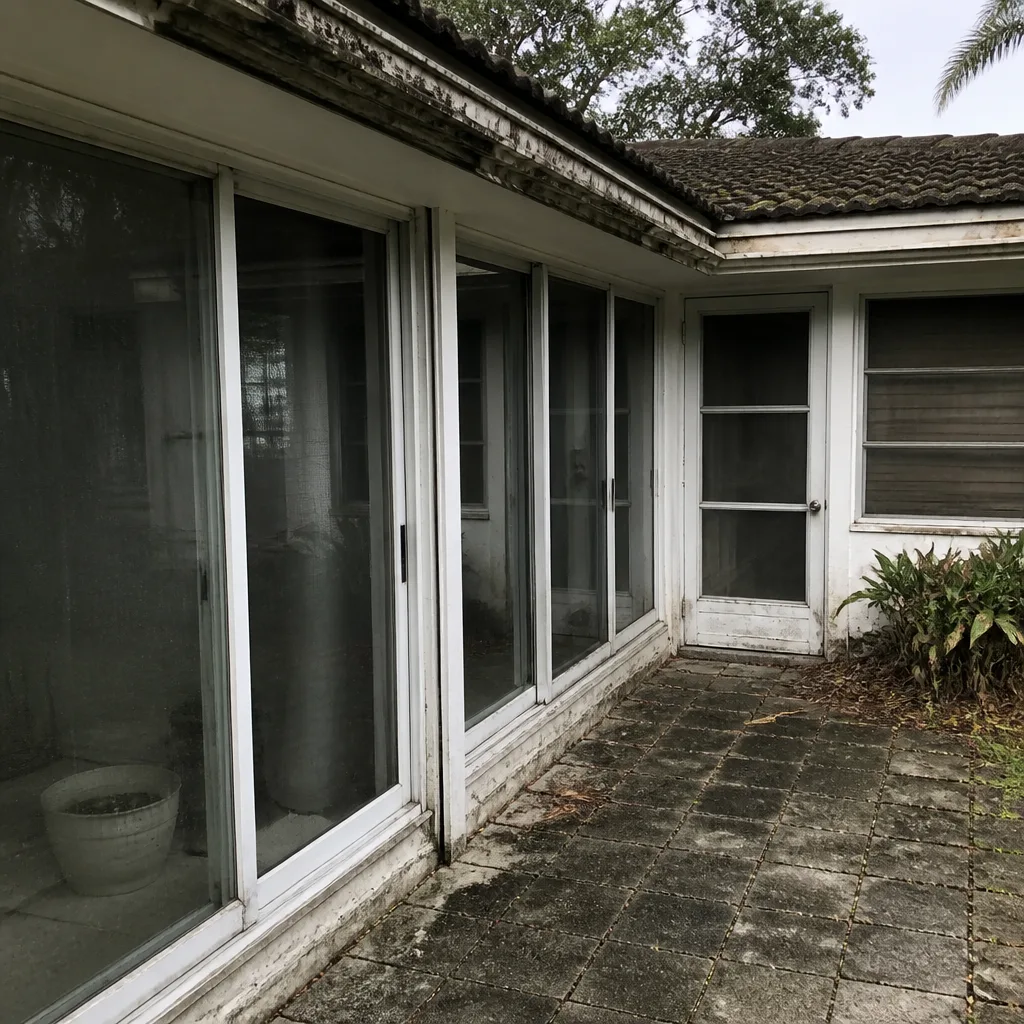 Before
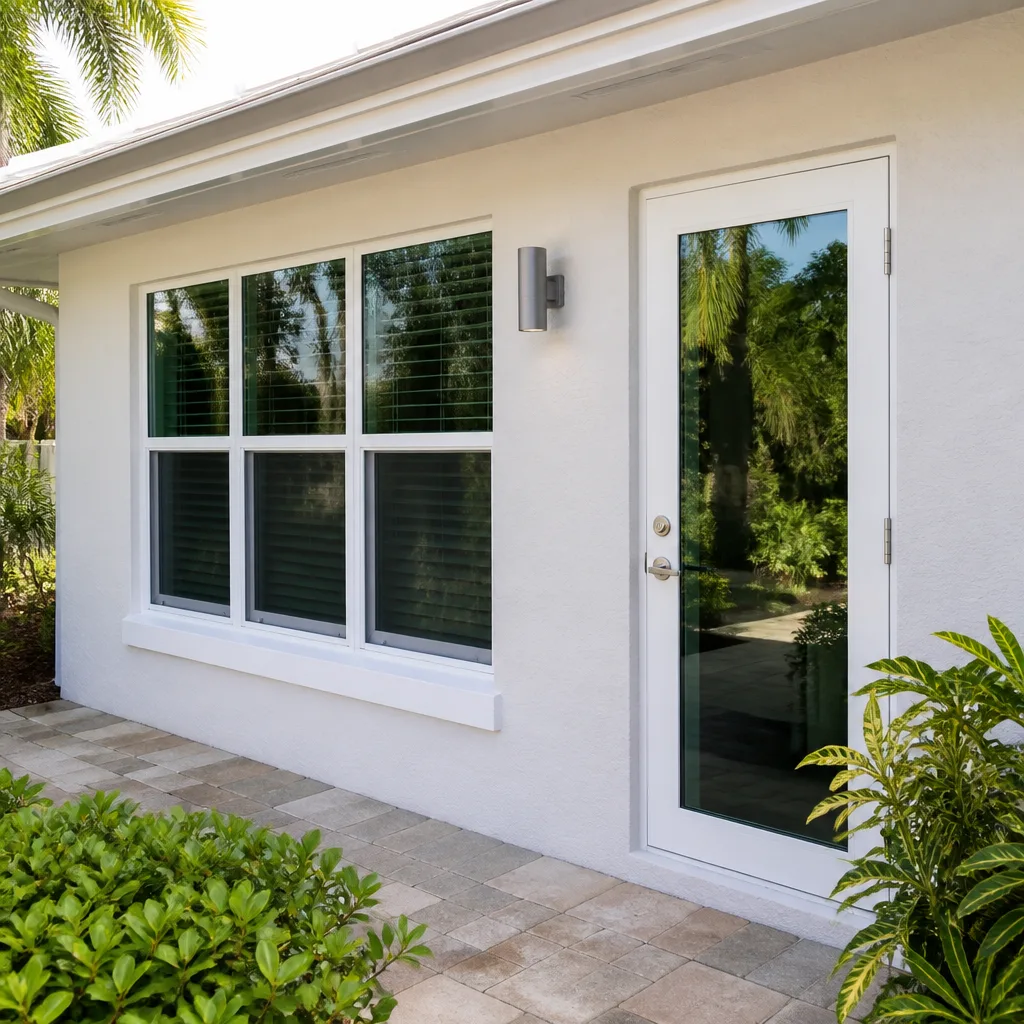 After
AfterTable of Contents
- The Coastal Degradation Timeline: What Fails When in Hobe Sound
- How to Test Weep Holes for Blockage Without Removing the Frame
- Glazing Tape and Perimeter Sealant Inspection Protocol
- Hardware Lubrication Schedule for Salt-Air Environments
- Documentation Method: Building a Record for Insurance and Warranty
- Manufacturer-Specific Notes for PGT, ECO, and Mr-Glass Units
- Common Mistakes to Avoid
- When to Call a Professional
- Frequently Asked Questions
The Coastal Degradation Timeline: What Fails When in Hobe Sound
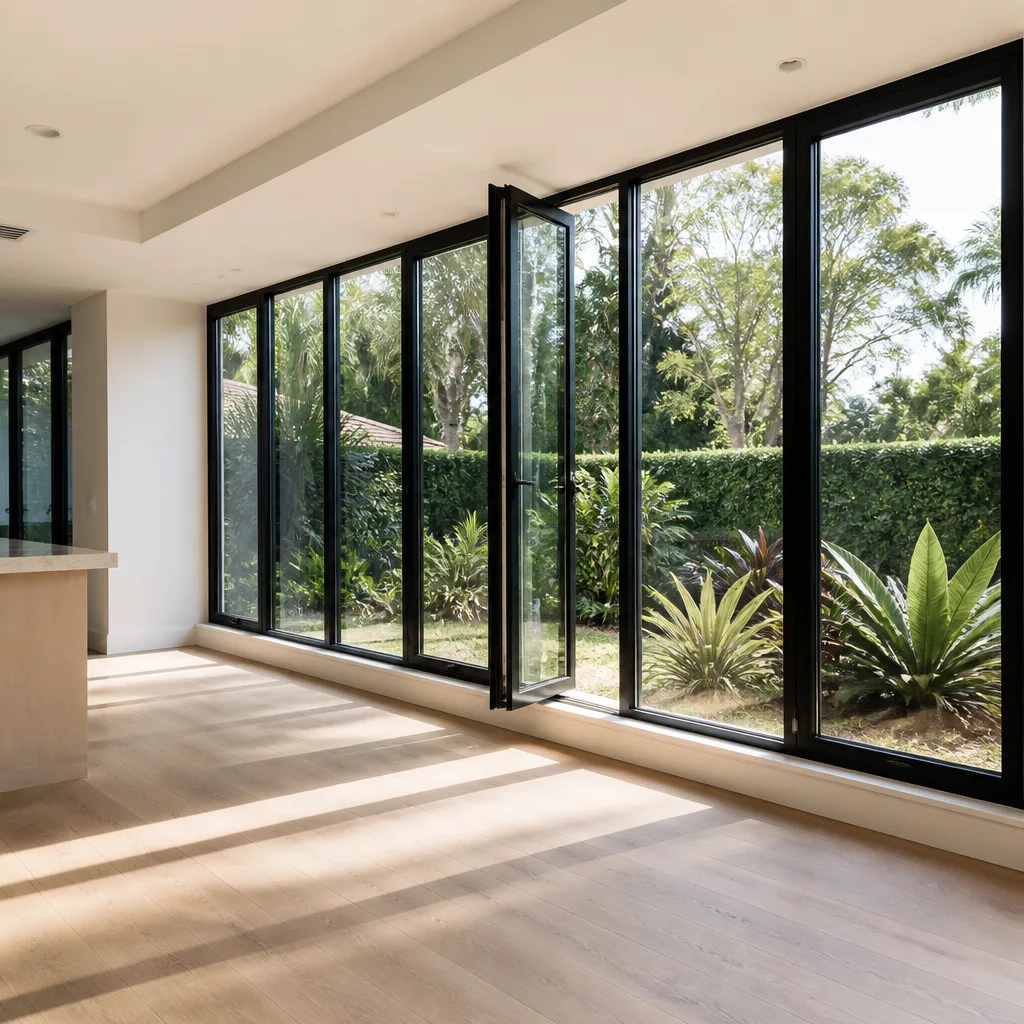
Generic maintenance checklists organize tasks by season: spring cleaning, winter prep. That structure fails in South Florida, where the relevant variables are salt load, UV exposure, and wet-season humidity, not temperature swings. We’ve organized this checklist by observed failure intervals in Hobe Sound and the broader Martin County coastal zone, based on 18,000+ openings we’ve measured and documented since 2012.
6 Months: Surface-Level Accumulation
At this stage, damage is reversible with cleaning. The salt film that deposits on hardware and frames during onshore flow events hasn’t yet initiated galvanic corrosion, and organic debris in weep holes hasn’t compacted into a complete blockage.
- White salt residue on stainless steel locks and hinges - visible as a hazy film, not yet pitting
- Partial weep hole obstruction from pollen, spider webs, and leaf litter
- Track debris in sliding windows and patio doors, increasing rolling resistance
- Early mildew on exterior sealant beads in shaded north-facing exposures
Homes within a half-mile of the Intracoastal Waterway or the oceanfront in communities like Olympus see this accumulation faster than properties west of Bridge Road. The difference is measurable: we’ve found 2-3x the salt deposit density on hardware at homes in Jupiter Island-adjacent Hobe Sound compared to interiors of The Club at Hobe Sound.
2 Years: Sealant and Drainage Degradation
By 24 months, the initial factory sealant bead has undergone its first full wet-season expansion-contraction cycle. Silicone-based sealants begin to lose adhesion at the substrate interface; polyurethane formulations may show surface chalking from UV.
- Perimeter sealant gaps of 2-3 mm opening at frame-wall junctions
- Complete weep hole blockage in 15-20% of units, based on our field surveys
- Glazing tape compression set - the tape no longer rebounds when depressed
- First-stage corrosion on aluminum hardware: surface roughening, not yet pitting
This is the critical intervention window. Sealant failure at 2 years, if addressed, prevents the water intrusion that destroys framing at 5 years.
5 Years: Structural and Hardware Failure
At this interval, neglected maintenance produces irreversible damage. We’ve replaced entire window banks in Hobe Sound homes where the original installer provided no maintenance guidance and the homeowner assumed impact-rated meant maintenance-free - a misconception our Window Installation services team addresses with every project through detailed homeowner education.
- Stainless hardware pitting and thread galling in coastal-grade 304 alloys; 316-grade holds longer but still degrades
- Frame drainage channel corrosion in aluminum windows, particularly at welded corners
- Insulated glass unit (IGU) seal failure: visible fogging between panes, indicating argon loss and U-factor degradation
- Impact-rated laminate delamination at glass edges where moisture has wicked through compromised edge seals
10 Years: System Replacement Indicators
Even well-maintained windows in Hobe Sound’s climate reach performance end-of-life by year 10-12. The relevant question is whether the unit still meets its original design pressure rating and energy performance, not whether it still opens and closes.
- Frame wall thickness reduction from salt corrosion in extruded aluminum
- Permanent compression set in weatherstripping, measurable air leakage
- Coating failure on low-E surfaces, visible as iridescent patches
- Hardware mounting screw loosening in corroded frame substrate
At this stage, window replacement in Hobe Sound becomes the cost-effective path. Repair of multiple failed subsystems typically exceeds 60% of replacement cost, and repaired units won’t recover original impact ratings without full recertification testing.
How to Test Weep Holes for Blockage Without Removing the Frame
Blocked weep holes are the single most common source of interior water damage in Hobe Sound homes. The weep system - small openings at the bottom of the frame that drain accumulated water to the exterior - fails silently. Water backs up into the sill track, overflows the interior dam, and enters wall cavities. By the time drywall shows staining, the damage typically extends to framing and insulation.
The standard advice - “look for debris” - is inadequate. A weep hole can appear clear while being functionally blocked by compacted organic matter, salt crust, or insect nests just inside the channel.
Step-by-Step Weep Hole Function Test
- Locate all weep holes. Most vinyl and aluminum windows have 2-4 weep slots per sash, positioned on the exterior face of the sill. On sliding windows, they’re typically centered; on single-hung units, they’re at the bottom rail corners. Mark their locations with masking tape so you don’t lose them in the next step.
- Clear visible obstruction. Use a wooden toothpick or plastic zip tie - never metal, which can score the weep slot and create a new leak path. Work gently; the goal is to confirm passage, not force through a complete blockage.
- Apply controlled water. With a spray bottle, apply 30-50 mL of water directly into the track above the weep hole. The water should appear at the exterior within 10-15 seconds. If it pools, drains slowly, or disappears entirely (indicating absorption into the frame), the weep system is compromised.
- Check for hidden blockage. If water doesn’t exit promptly, insert a flexible 1/8-inch weep cleaning tool (available from window supply houses) or a trimmed pipe cleaner. Work it in 2-inch increments, rotating gently. Resistance at a consistent depth indicates a plug location.
- Test after clearing. Repeat the water application. Document the before/after flow rate with a phone video - this becomes evidence if warranty or insurance questions arise later.
Why This Matters Specifically in Hobe Sound
The combination of heavy wet-season rainfall (June through October, often 60+ inches annually in Martin County) and salt-laden air creates a unique failure mode: salt crystals form in weep channels as water evaporates, progressively narrowing the passage. We’ve found complete salt-cemented blockages in 3-year-old windows in oceanfront Hobe Sound homes. Inland, the same window design might reach 8-10 years before comparable blockage.
Homes with landscaping that directs sprinkler spray against window faces - common in golf-course communities like Hobe Sound Golf Club - experience accelerated weep blockage from the combination of irrigation minerals and organic debris.
Glazing Tape and Perimeter Sealant Inspection Protocol
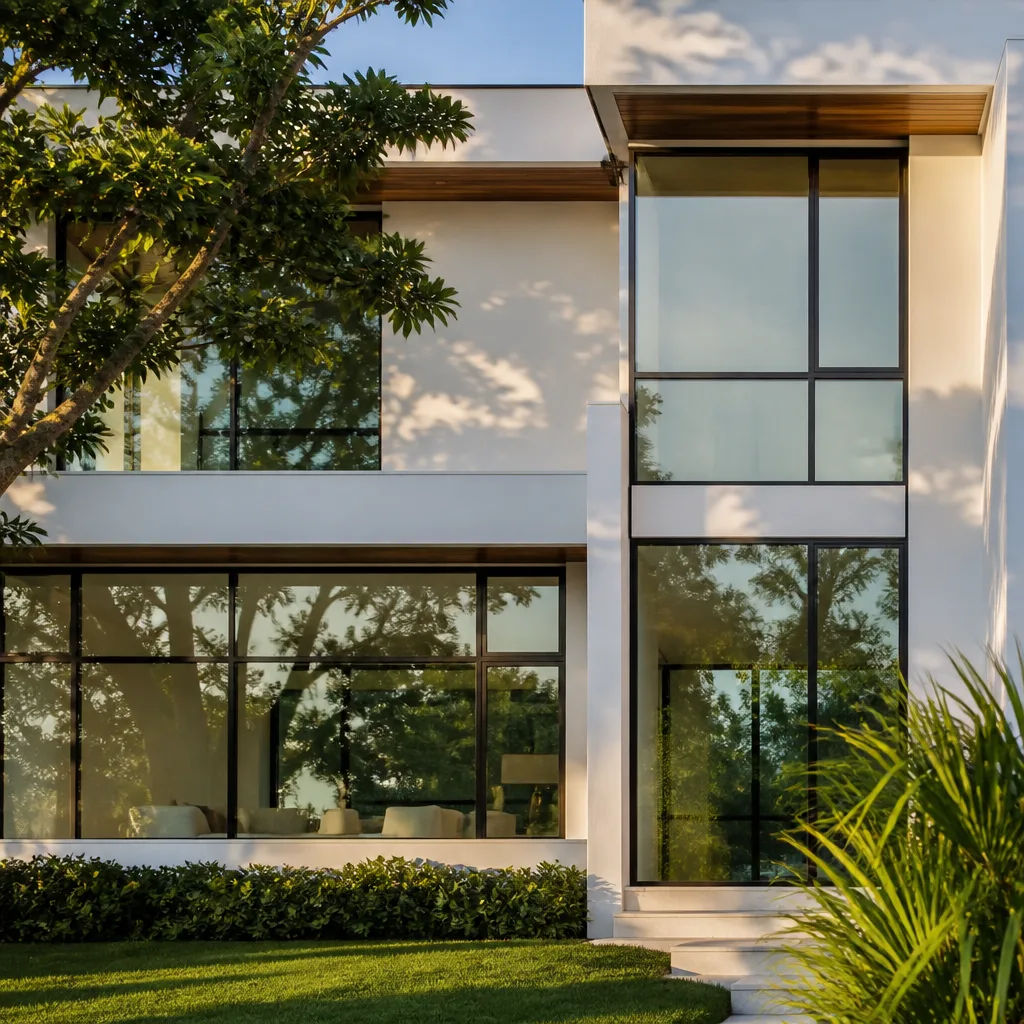
Glazing tape is the hidden seal between the glass edge and the frame, compressed during manufacture to create a moisture and air barrier. Perimeter sealant is the visible bead between the frame exterior and the wall. Both degrade predictably in Hobe Sound’s climate, but the inspection methods differ.
Glazing Tape: What to Look For
Glazing tape is not directly visible on most installed windows - it’s covered by interior and exterior glazing stops or by a continuous vinyl fin. However, failure indicators propagate to visible surfaces:
- Glass edge fogging. A hazy band 3-5 mm in from the glass perimeter, visible when the sun strikes at low angles, indicates tape adhesive failure and moisture ingress at the edge.
- Glass rattle. Tap the glass center with a knuckle. A dull thud indicates proper tape compression; a sharp ring or visible vibration suggests the tape has lost resilience and the glass is loose in the frame.
- Exterior bead separation. The glazing stop or fin that retains the glass pulls away from the frame, revealing a gap. Measure this gap: 2 mm or more indicates the tape has compressed beyond recovery.
- Color change in exposed tape. On units where tape is visible at the edge (some commercial-style installations), fresh tape is black or gray with a matte surface. Degraded tape turns glossy, then develops surface cracking.
We document glazing tape condition with close-up photography and a millimeter-scale reference (a coin or ruler) in frame. For window installation in Hobe Sound under the Haven Standard, we specify tape compression at installation and photograph the fresh condition - the customer keeps this baseline for future comparison.
Perimeter Sealant: Measurement-Based Inspection
Vague advice to “look for cracks” misses early failure. We inspect perimeter sealant on a quantitative basis:
- Adhesion test. Gently probe the sealant-to-frame interface with a plastic spatula at 6-inch intervals. Proper adhesion resists lifting; failed adhesion separates with light pressure.
- Gap measurement. Where the sealant has pulled away, measure the gap width with a feeler gauge or by photograph with a scale reference. Gaps under 1 mm are monitorable; 1-3 mm require resealing; over 3 mm indicate active water intrusion risk.
- Bead profile check. A properly tooled sealant bead has a concave or triangular profile that sheds water. A flattened or convex profile indicates UV degradation or improper original application.
- Substrate inspection. Look behind lifted sealant for staining, soft drywall, or corrosion on aluminum fins - evidence that water has already bypassed the seal.
Sealant replacement in Hobe Sound requires products rated for joint movement of ±50% and salt-spray resistance per ASTM B117. We’ve seen generic silicone fail within 18 months on oceanfront homes where specified structural silicone holds 10+ years.
Hardware Lubrication Schedule for Salt-Air Environments
Hardware corrosion in Hobe Sound is not a question of if but when. The wrong lubricant accelerates failure by trapping salt particles against moving surfaces, creating an electrochemical cell that pits even 316 stainless steel.
Stainless Steel Hardware: 316 vs. 304
Most residential window hardware is 304 stainless, adequate for inland use but marginal within a mile of salt water. Premium units, including many PGT and ECO Window Systems lines we specify, use 316-grade hardware with molybdenum content for chloride resistance. The lubrication protocol differs:
- 304-grade hardware: Inspect every 3 months for surface film; lubricate every 6 months with a dry film lubricant containing PTFE (Teflon) or molybdenum disulfide. Never use oil-based products - they attract and retain salt.
- 316-grade hardware: Inspect every 6 months; lubricate annually with the same dry film products. The extended interval reflects slower corrosion initiation, not immunity.
Aluminum Hardware: A Different Problem
Some sliding window systems use aluminum rollers, locks, or keepers for weight savings. Aluminum doesn’t rust, but it galvanically corrodes when in contact with stainless fasteners in salt air - the aluminum sacrifices itself. The white powdery residue is aluminum oxide, not rust, and it indicates the hardware is being consumed.
For aluminum hardware:
- Clean with fresh water only - no solvents that remove protective oxide layers
- Lubricate rollers with silicone spray, not petroleum-based products that swell rubber tires
- Replace when rolling resistance increases measurably; worn rollers damage track extrusions
Lubricants to Avoid in Coastal Environments
We’ve replaced hardware destroyed by well-intentioned maintenance with the wrong products:
- WD-40 and similar water-displacing oils: Leave a sticky film that binds salt; corrosion accelerates within weeks
- White lithium grease: Excellent for garage doors, catastrophic for window hardware in salt air - it emulsifies with humidity and creates a salt-slurry
- Graphite powder: Effective in dry climates, but forms galvanic cells with aluminum in wet salt air
The correct product for most Hobe Sound applications is a dry film lubricant in aerosol form, applied sparingly to moving surfaces only, with excess wiped away to prevent particle trapping.
Documentation Method: Building a Record for Insurance and Warranty
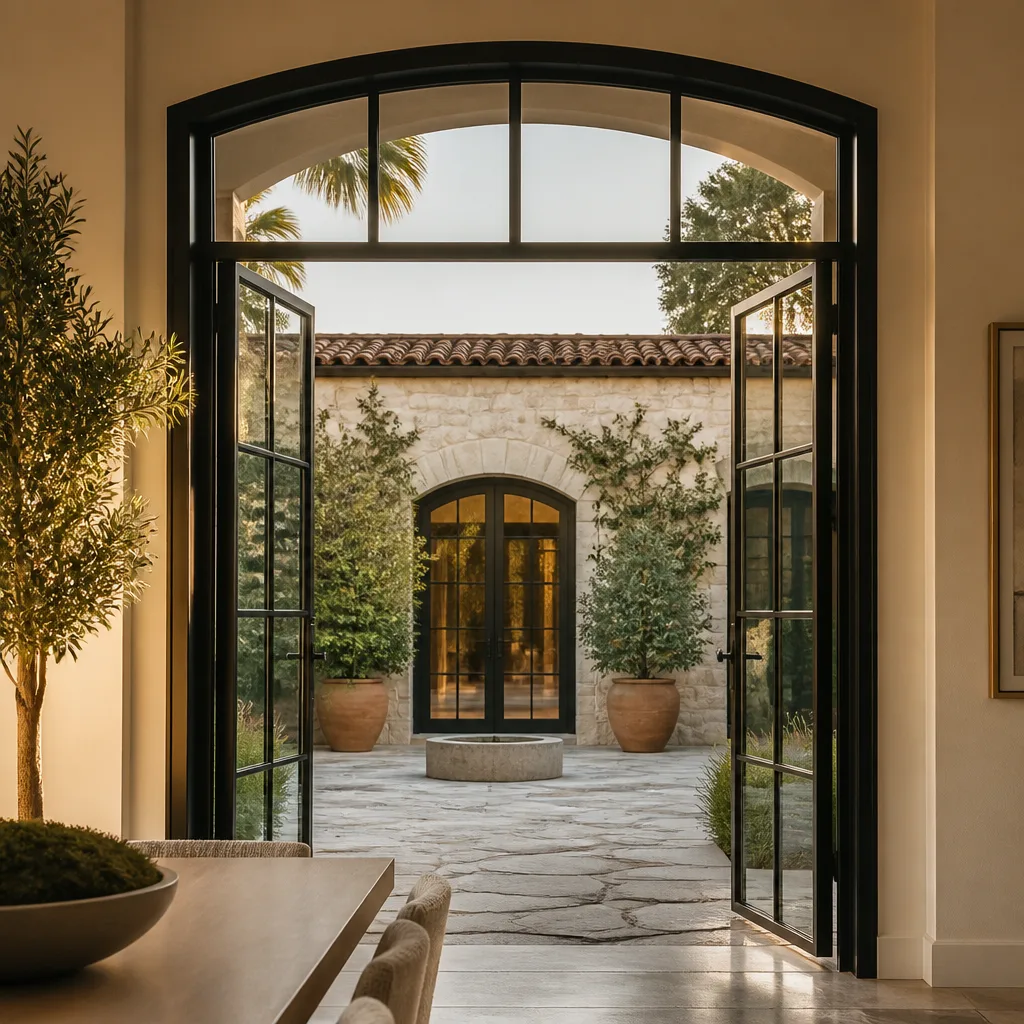
Every completed job under the Haven Standard leaves a documented photo record. We recommend homeowners apply the same discipline to maintenance. A well-documented inspection history transforms a warranty dispute from your word against the manufacturer’s to a matter of record.
The Minimum Viable Record
For each inspection, create a dated folder containing:
- Overall context photo. Each window from 6 feet, showing the full unit and adjacent wall condition. This establishes the inspection date and general state.
- Close-up condition photos. Hardware, sealant, weep holes, and any anomalies, with a scale reference in frame. A U.S. quarter works; better is a small ruler.
- Written notes. Measurements taken (weep flow rate in seconds, sealant gap in millimeters), products used for cleaning or lubrication, and weather conditions during inspection.
- Video of functional tests. 10-15 seconds showing weep water flow, lock operation, and sash movement. Video is harder to dispute than still photos.
Storage and Access
Store records in at least two locations: cloud storage (Google Drive, iCloud) and local backup. Email a copy to your insurance agent when significant conditions are found - this creates a timestamped third-party record.
If a warranty claim arises, the manufacturer’s first response is typically to deny based on “improper maintenance.” A dated photo sequence showing proper weep hole clearing, correct lubricant use, and measured sealant gaps shifts the burden. We’ve supported customers through this process with the documentation from our original installation and subsequent service visits.
For homeowners considering door installation in Hobe Sound, the same documentation protocol applies to sliding glass door tracks, multipoint lock systems, and impact door thresholds.
Manufacturer-Specific Notes for PGT, ECO, and Mr-Glass Units
Not all impact-rated windows share the same maintenance requirements. We’ve worked with eight manufacturer lines and can specify the details that matter for the brands most common in Hobe Sound installations.
PGT WinGuard and EnergyVue Series
PGT’s laminated glass impact system uses a polyvinyl butyral (PVB) interlayer that is sensitive to edge moisture. The critical maintenance point is the edge seal: once moisture wicks into the laminate edge, delamination propagates inward. PGT specifies that edge seal inspection is annual in coastal zones, not the 2-year interval adequate for inland use.
PGT hardware is 316-grade stainless on premium lines, 304 on builder-grade WinGuard. The lubrication schedule above applies directly. PGT’s warranty explicitly excludes “corrosion due to lack of maintenance” - documentation matters.
ECO Window Systems Impact Lines
ECO uses a thermoplastic interlayer (SentryGlas or equivalent) with higher moisture resistance than PVB, but their frame drainage design is more sensitive to weep blockage. The sill track on ECO sliding windows has a lower profile than PGT; less water volume is required to overflow the interior dam. Weep testing every 6 months is essential, not optional.
ECO’s hardware is typically 304-grade with optional 316 upgrade. We specify 316 for all Hobe Sound installations - the upgrade cost is modest relative to replacement.
Mr-Glass Custom and Geometric Units
Mr-Glass specializes in custom shapes and large-format units where the glass-to-frame ratio is higher and the structural load on sealant is greater. Their custom shapes often lack the standardized weep hole pattern of rectangular windows; drainage may rely on internal channels to lower corners.
For Mr-Glass units, we recommend professional inspection at 2-year intervals even with diligent homeowner maintenance. The internal drainage paths are not accessible for homeowner cleaning, and blockage requires partial disassembly.
Common Mistakes to Avoid
- Pressure washing window frames directly. High-pressure water forces past weatherstripping and into weep channels, compounding the blockage problem it appears to solve. Use low-pressure rinse and soft brush only.
- Assuming impact-rated means maintenance-free. The impact rating certifies performance under a single test condition (large missile, cyclic pressure). It does not confer corrosion immunity or sealant longevity. We’ve replaced impact-rated windows at 4 years due to neglected maintenance.
- Using vinegar or acidic cleaners on aluminum frames. Acids etch anodized aluminum finishes, creating porous surfaces that trap salt and accelerate corrosion. pH-neutral cleaners only.
- Ignoring north-facing exposures. Shaded north faces in Hobe Sound stay wet longer after rain and irrigation, promoting mildew on sealant and frame. These surfaces often show the earliest degradation but receive the least attention.
- Applying sealant over old sealant without removal. The new bead adheres to the old, not the substrate. When the old fails, both lift. Complete removal and solvent cleaning is required for proper adhesion.
- Waiting for visible water intrusion to act. By the time interior drywall shows staining, framing damage is typically extensive. The inspection protocols above are designed to catch failure before water enters the wall.
- Using the same maintenance schedule as inland Florida relatives. A homeowner in Orlando or Gainesville can reasonably inspect annually. In Hobe Sound, that interval misses the 6-month salt accumulation window that drives accelerated corrosion.
When to Call a Professional
Some conditions exceed homeowner maintenance scope. Call for professional evaluation when: glass edge fogging is visible (indicates IGU seal failure, not repairable); hardware mounting screws are loose in corroded frame material (structural integrity concern); sealant gaps exceed 3 mm with substrate staining behind; window operation requires force that distorts the frame; or you’re within the 5-year interval and have no prior professional inspection record.
Sightline Windows & Doors Hobe Sound offers free estimates in Hobe Sound - call (772) 362-5967 - and you can explore more guides & resources on our blog. Every evaluation includes a measured survey you keep, a written scope with line-item pricing, and a documented photo record of findings. Our technicians are background-checked, uniformed, and identified by license number before arrival, per Haven Clause 3 (Verified Crews).
Frequently Asked Questions
Professional inspection and basic maintenance for a typical 2,500-square-foot Hobe Sound home runs $200-$400, with resealing or hardware replacement adding $150-$600 per window depending on access and extent. For detailed pricing context, see our Windows & Doors Cost Breakdown: The Hobe Sound Homeowner’s Reference for 2026. Call (772) 362-5967 for an exact quote - estimates are free, and we review competitor written estimates at no charge under our Free Second Opinion policy.
No. Haven Clause 1 (Have it in writing) means the measured survey and the written quote are the same document. The price we name before work starts is the price on the final invoice. No change orders for conditions we should have identified during survey.
Every 6 months for surface accumulation and weep function; every 2 years for sealant and glazing tape; every 5 years for full hardware and structural review. Salt-air exposure within a mile of the Intracoastal or Atlantic justifies the shorter intervals compared to inland Florida.
Maintenance tasks - cleaning, lubrication, sealant replacement - do not require permits. Replacement of the window unit or modification of the frame-wall interface does, and Sightline pulls all required permits and schedules inspections as part of installation scope. For details on Florida requirements, read Windows & Doors Permits, Codes & Inspections in FL: What You Need to Know. We document permit numbers in the photo record you receive.
No. Garage door hardware operates in a different corrosion environment and typically uses lithium or petroleum-based lubricants that destroy window hardware in salt air. Window hardware requires dry film lubricants with PTFE or molybdenum disulfide.
Dated photos of each inspection, measurements taken, products used, and any professional service records. The manufacturer’s first defense is typically “lack of maintenance.” A documented history shifts the burden. We provide this documentation standard on every Sightline installation and service visit.
The Bottom Line
Window maintenance in Hobe Sound is not a seasonal ritual but a salt-air survival protocol. The 6-month, 2-year, 5-year, and 10-year intervals reflect actual observed failure modes in Martin County’s coastal climate, not generic schedules from elsewhere. Weep hole function testing, measured sealant inspection, and correct hardware lubrication with documented evidence are the practices that preserve impact ratings and avoid the water damage that voids warranties and destroys framing. The cost of systematic maintenance is a fraction of premature replacement, and the documentation protects your investment if disputes arise.
Call (772) 362-5967 to schedule your free estimate. Every Sightline engagement begins with a measured survey you keep, a written price before any work starts, and a documented photo record when the job is done - the Haven Standard since 2012.
Written by Sonia Raman, Owner at Sightline Windows & Doors Hobe Sound, serving Hobe Sound since 2012.
Six Reasons Homeowners Choose Sightline Windows & Doors Hobe Sound

Impact systems engineered to design pressures up to +/-100, matched to your wind zone - your openings hold when the storm arrives.
Low-E insulated impact glass from our manufacturer lines commonly cuts monthly cooling bills 20-30%.
Laminated impact glass shuts out up to 40% of outside noise - traffic, neighbors, weather.
Monitoring services run $30-90 a month. Laminated impact glass resists forced entry around the clock, with no subscription.
Florida homeowners average around 25% savings on the windstorm portion of their policy after protecting every opening - some homes qualify for more.
A full impact package upgrades curb appeal, buyer confidence and appraised value in one project.
Other Sightline Windows & Doors Hobe Sound Services
What Neighbors Say About Sightline Windows & Doors Hobe Sound