Last updated September 24, 2026
New windows and doors improve comfort, cut energy bills and add long-term value to your home. Sightline Windows & Doors Hobe Sound pairs proven product lines with our own installing crews for lasting performance - and a price we put in writing.
1. Choose your installer
The unit is half the job - the install is the other half. Our own background-checked crews measure, set, seal and insulate every opening, and they know the lines we quote inside and out because they install them every week.
2. Select the right products
Compare styles, materials and glass packages side by side until the fit is right for your rooms, your budget and your goals. The product-line comparison below is the place to start.
3. Prepare your home for install
Before install day we walk you through a short checklist - furniture pulled back, treatments down, a clear path to each opening - so install day is watch-it-happen, not scramble.
Compare the Lines We Quote
Every project is priced on the same lines, side by side - the price indicators below are relative, and your consultant shows exact numbers on your actual openings.
PGTThe line Florida homeowners arrive naming - the most Miami-Dade certifications in the industry$$$
- More Miami-Dade NOA certifications than any other line we quote
- WinGuard, EnergyVue and ClassicVue Max systems built for every wind zone
- 99% on-time delivery keeps your install date on the calendar
CGIThe heavyweight impact line$$$$$
- Large-missile impact ratings for the strictest wind zones
- Architectural-grade aluminum with commercial-depth frames
- The line we quote when protection is the whole point
CWSThe Florida value pick$$
- Vinyl systems built in Florida for Florida codes
- Strong energy packages at the friendliest price point
- The smart start for whole-home replacements on a budget
ESWSlim lines, big glass$$$$
- Narrow-sightline aluminum for modern elevations
- Oversized openings and floor-to-ceiling glass
- Impact-rated without the bunker look
ECOThe aluminum impact workhorse$$$
- Miami-built aluminum impact systems
- A strong price-to-protection ratio for coastal homes
- Proven inventory lines with short lead times
Windows & Doors Warning Signs: A Hobe Sound Homeowner’s Reference Guide
A window that fogs between the panes is a failed seal, not a dirty glass problem. In Hobe Sound’s coastal climate, the argon or krypton that has already escaped is not returning, meaning the unit’s thermal performance has permanently dropped to single-pane equivalency regardless of how clean the frame looks. Most warning-sign guides describe symptoms without connecting them to specific failure mechanisms; for more guides & resources, see our blog. This reference ties each observable sign to its root cause, the estimated timeline to structural or weather-barrier failure, and the repair category it falls into, so you can make a triage decision without guessing.
Quick Answer
The five critical warning signs that a window or door in your Hobe Sound home needs professional evaluation - detailed in our The Complete Guide to Windows & Doors in Hobe Sound - are: fogging between glass panes (failed insulated glass unit seal), visible frame flex or distortion (structural degradation), hardware that no longer engages flush (alignment failure), water staining or damp odor near the opening (flashing or sealant breach), and glass that rattles in moderate wind (glazing system failure). Each indicates a specific failure mechanism with a distinct repair path and cost range, from $150 surface sealant work to full unit replacement.
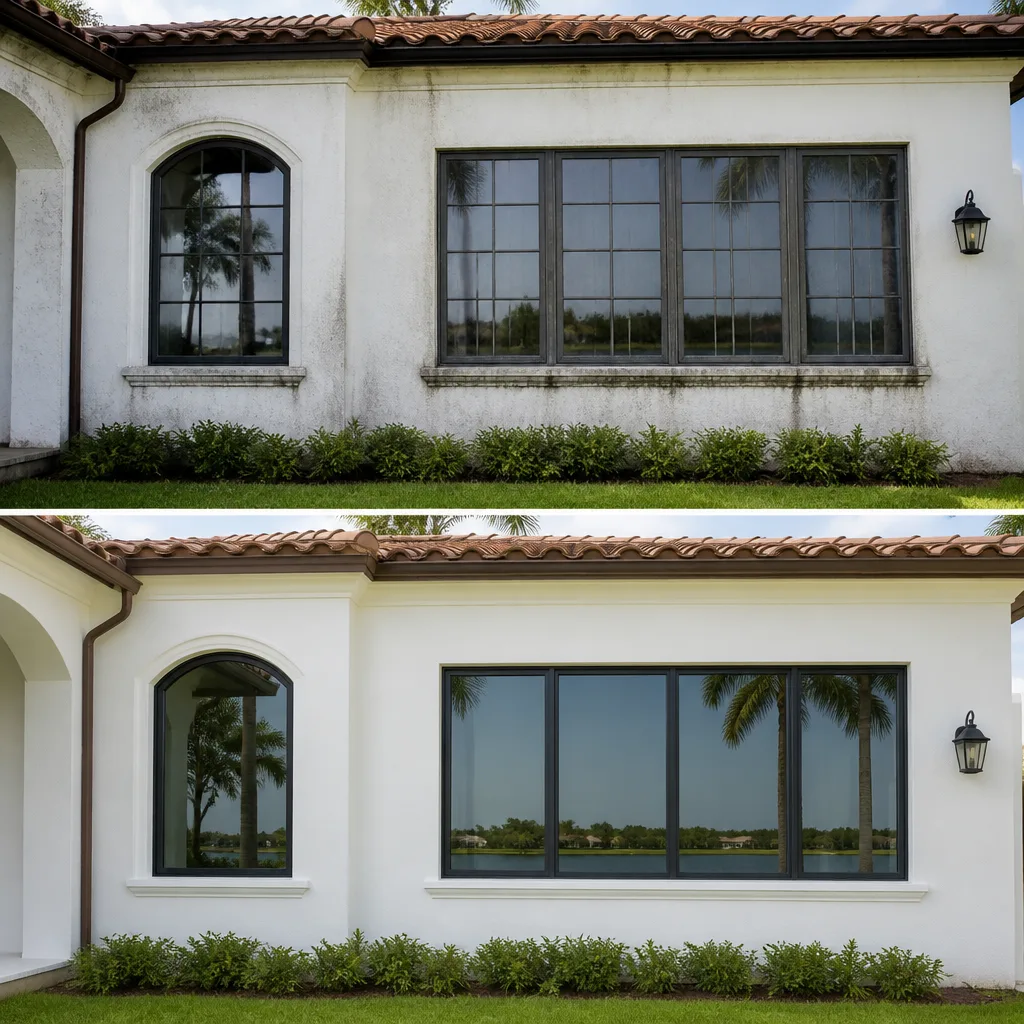
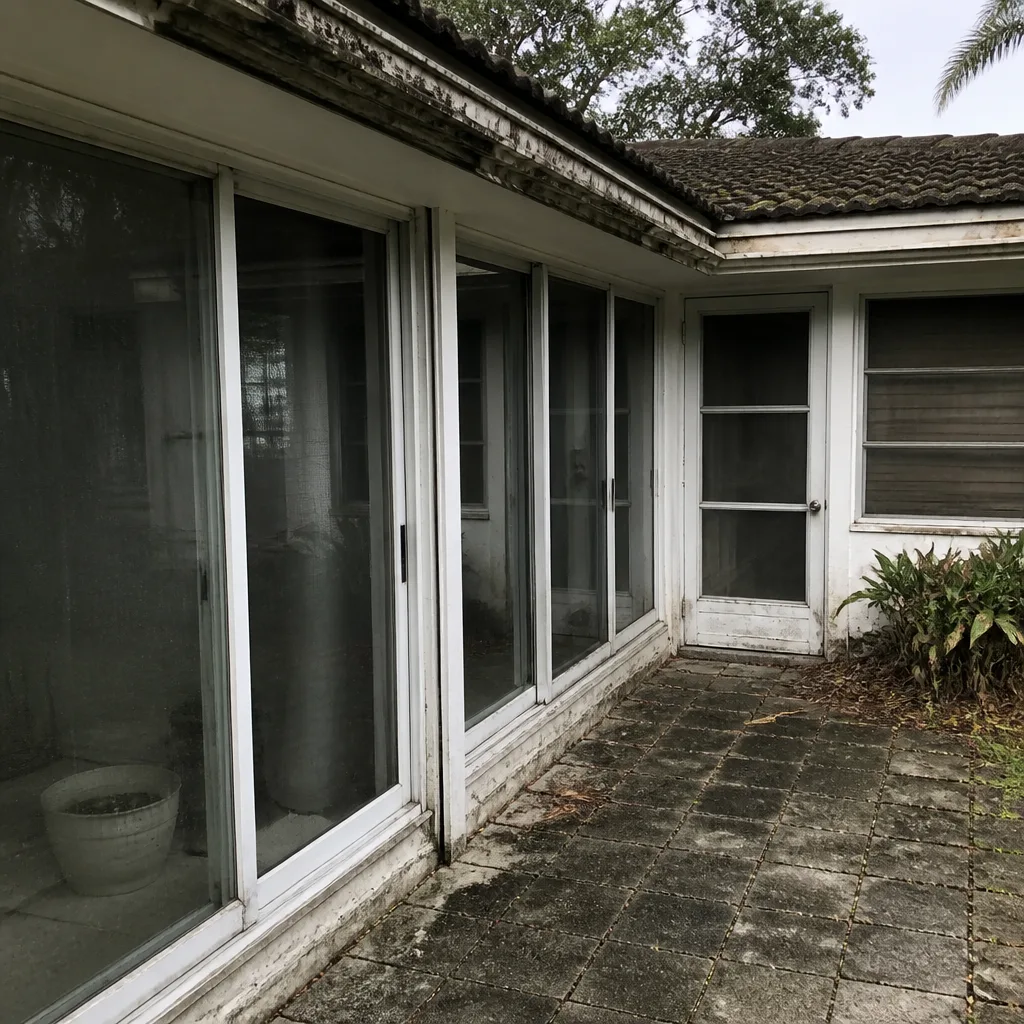 Before
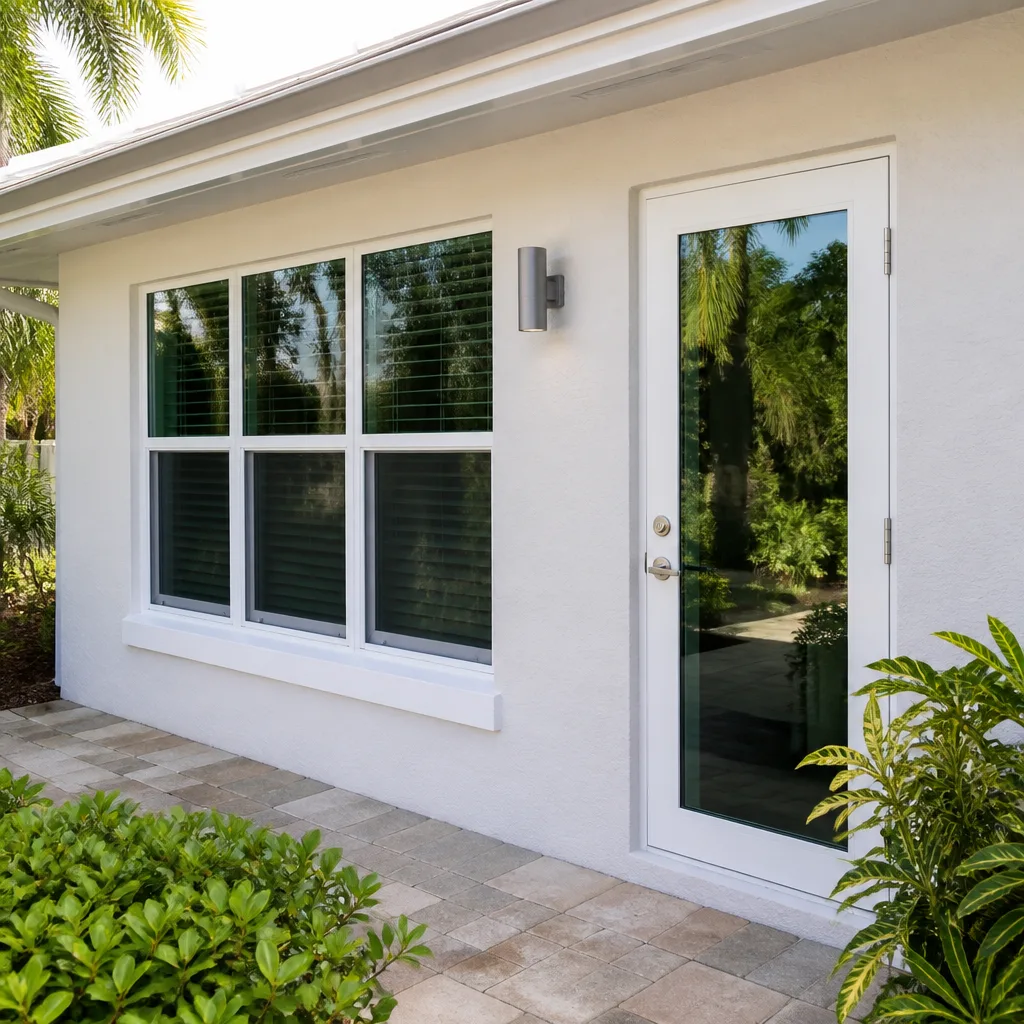 After
AfterTable of Contents
- Fogging Between Panes: What a Failed Seal Actually Means
- Frame Flex and Distortion: When the Structure Itself Is Failing
- Hardware That Won’t Engage: The Alignment Warning
- Water Intrusion Signs: Distinguishing Sealant from Flashing Failure
- Glass Rattle in Wind: Glazing System Breakdown
- How Hobe Sound’s Coastal Climate Accelerates Failure Timelines
- Impact-Rating Voids: When the Glass Looks Fine But the Protection Is Gone
- Documenting Warning Signs for Insurance or Warranty Claims
Fogging Between Panes: What a Failed Seal Actually Means
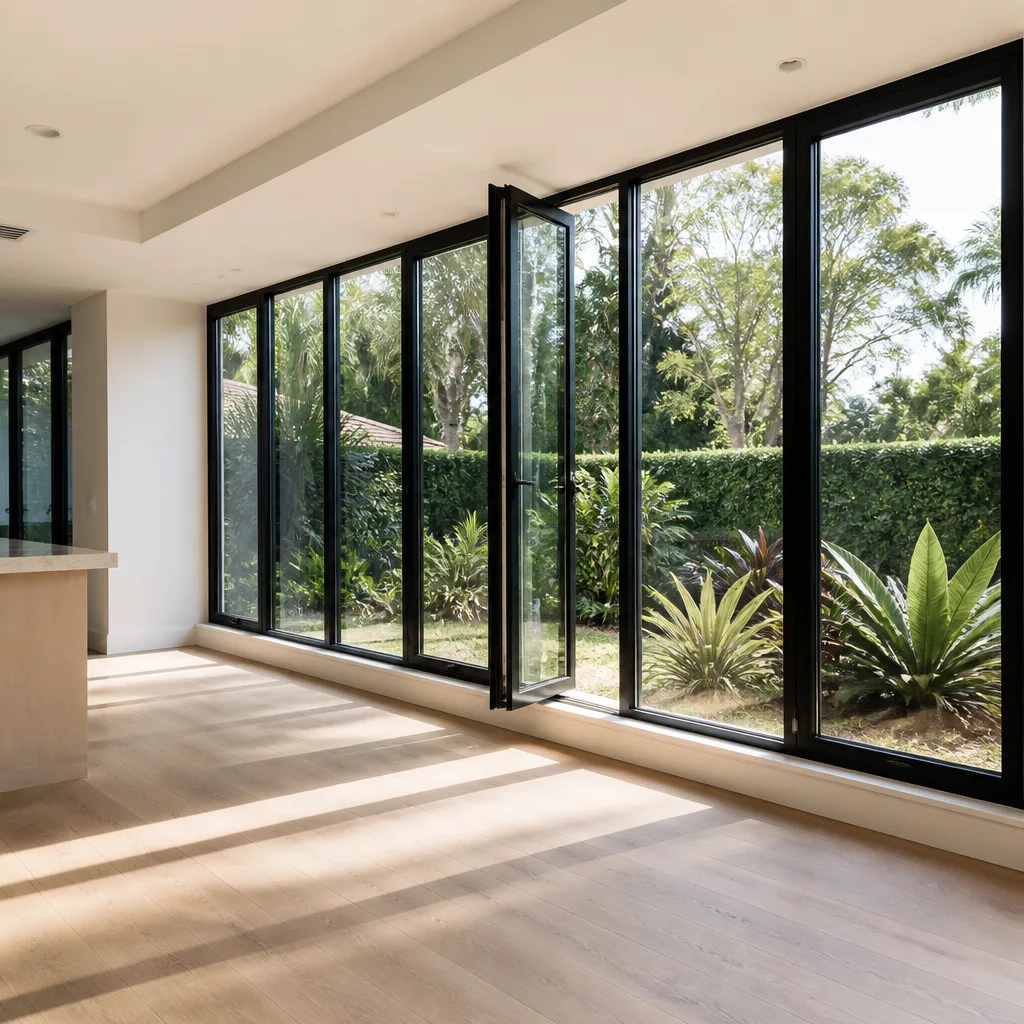
Fogging or haze between double- or triple-pane glass is the most misdiagnosed window problem we encounter in Hobe Sound. Homeowners often clean the exterior and interior surfaces repeatedly before realizing the moisture is trapped inside the sealed unit. By that point, the insulated glass unit (IGU) has already failed permanently.
Here’s what has actually happened. The perimeter seal, typically a dual-seal system of polyisobutylene (PIB) primary seal and silicone secondary seal, has breached. Moisture-laden air enters the cavity between panes. The desiccant material in the spacer bar, which is sized for a specific cavity volume, becomes saturated. Once saturated, it cannot regenerate. The inert gas fill, argon or krypton, has escaped and been replaced by ambient air. The center-of-glass U-factor, which might have been 0.30 with argon, reverts to approximately 0.50, equivalent to a single-pane window with a storm panel.
In Hobe Sound’s climate, this matters beyond energy bills. The saturated desiccant releases moisture during temperature swings, creating a cycle of condensation and evaporation that deposits mineral residue on the interior glass surfaces. This etching is permanent. The spacer bar itself, often aluminum in older units, corrodes in the presence of persistent moisture and salt air. We’ve opened failed IGUs in Jupiter Island and Hobe Sound homes where the spacer had degraded to white oxide powder.
Timeline to structural concern: A fogged IGU does not immediately threaten the frame or wall structure. However, the failed perimeter seal often indicates broader seal degradation. We typically see adjacent failure within 18 to 36 months in coastal installations.
Repair category: Glass-only replacement (retrofit the IGU into existing sash) or full sash replacement. For standard sizes, IGU replacement runs $280-$520 per opening in the Hobe Sound market. Custom geometric or impact-rated units range higher. Full sash replacement, required if the frame glazing channel is damaged, starts around $680 for vinyl and $1,200+ for impact-rated aluminum.
Key Takeaways
- Fogging between panes = permanent seal failure, not a cleaning issue
- Thermal performance drops to single-pane equivalency immediately
- Mineral etching and spacer corrosion follow; neither is reversible
- IGU replacement is typically 40-60% less than full unit replacement
Frame Flex and Distortion: When the Structure Itself Is Failing
Place your palm flat against the interior frame of a fixed window or the inactive panel of a sliding door. Apply moderate, steady pressure. A properly engineered frame should feel rigid, with deflection of less than 1/16 inch under hand pressure. If the frame bows visibly, flexes under light pressure, or you can feel movement at the corner joints, the structural integrity has degraded.
Frame flex indicates one of several failure mechanisms:
- Thermal expansion cycling fatigue. Vinyl frames in south-facing Hobe Sound exposures experience daily temperature swings of 40°F or more between winter night lows and afternoon sun load. PVC formulations vary in their expansion coefficients. Lower-tier vinyl, particularly formulations with high levels of calcium carbonate filler, become brittle after 5-7 years of UV solarization. The frame develops microcracks at stress concentrators, corner weld points, and hardware mounting bosses. Flex testing reveals the damage before it is visible.
- Reinforcement corrosion or separation. Vinyl frames contain galvanized steel or aluminum reinforcement channels. In coastal environments, particularly within two miles of the Intracoastal Waterway or Atlantic, salt air penetrates end-cap gaps and weep channel openings. The reinforcement corrodes, expands, and delaminates from the vinyl shell. The frame feels hollow and flexible where it should feel solid.
- Aluminum frame wall thinning. Extruded aluminum frames in older installations, particularly pre-2010 units, may have inadequate wall thickness for the span. Salt-air pitting thins the extrusion further. We’ve measured wall thickness below 0.060 inch on 15-year-old aluminum frames in Hobe Sound, where 0.080 inch is the minimum for structural adequacy.
Timeline to structural concern: Frame flex progresses to visible distortion within 12 to 24 months. Once corner joints separate or reinforcement delaminates, the frame cannot support design wind loads. In a named storm, the failure mode is typically corner blowout or sash departure from the frame.
Repair category: Full frame replacement. Localized repair is not structurally viable. For a standard 36×60 inch vinyl double-hung in Hobe Sound, expect $680-$1,100 for non-impact, $1,400-$2,200 for impact-rated. Aluminum impact-rated units from PGT or CGI run $1,800-$3,200 depending on design pressure rating and glazing specification.
Hardware That Won’t Engage Flush: The Alignment Warning
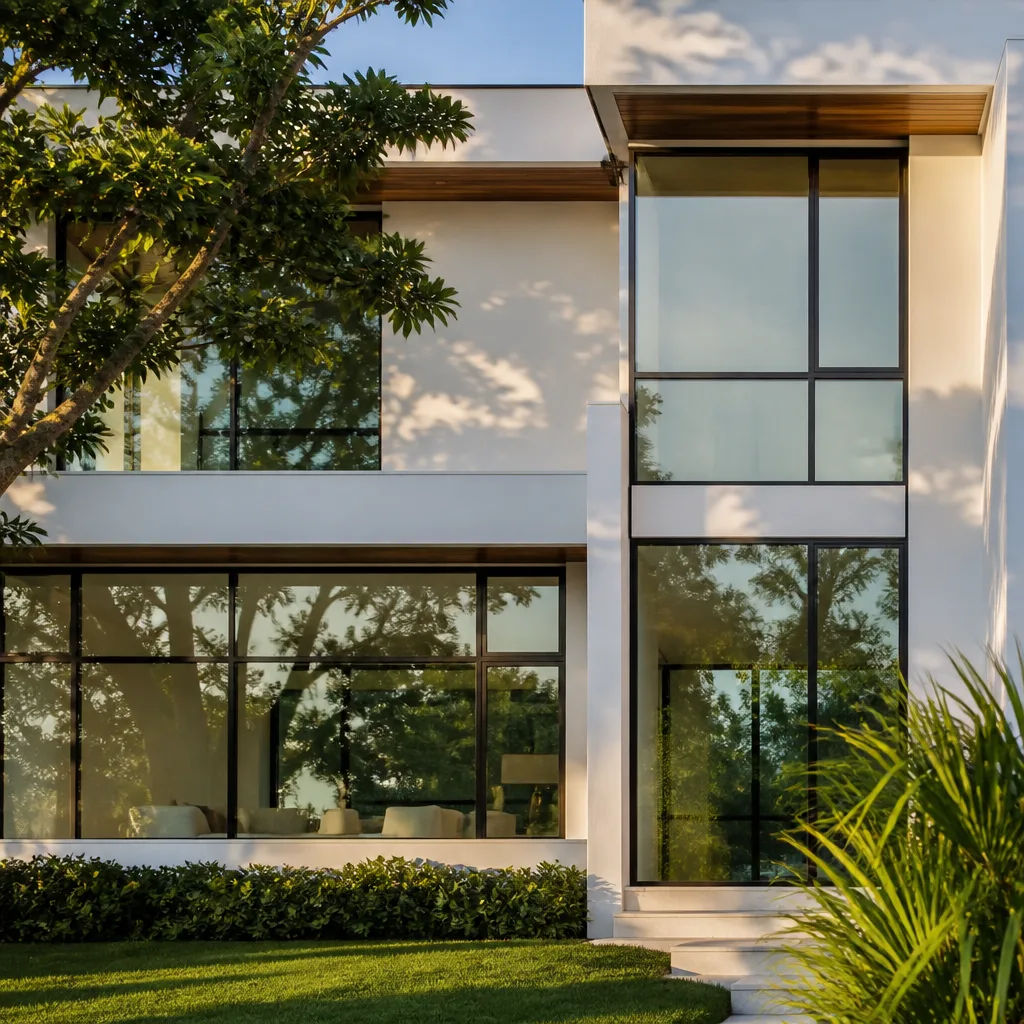
Locking hardware that requires extra force, no longer seats flush, or engages only at certain handle positions is not a lubrication problem. It is a positional tolerance warning. Window and door hardware is engineered to operate within specific alignment windows, typically ±1/16 inch for multi-point locks and ±1/32 inch for single-point sash locks. When the hardware no longer engages properly, the sash or panel has shifted relative to the frame.
The root causes differ by operating type:
- Single- and double-hung windows: Sash tilt mechanisms wear, allowing the sash to drop on the lock side. The tilt latch pins elongate their mounting holes in vinyl sashes. The interlock, the meeting rail seal between upper and lower sashes, no longer aligns vertically. This creates both a security gap and an air infiltration path.
- Sliding glass doors: Roller assemblies flatten or corrode. The panel drops, changing the lock-point relationship between the panel edge and the jamb receiver. In Hobe Sound’s salt air, we’ve found roller axle corrosion severe enough to seize rollers entirely on 6-year-old doors in oceanfront installations.
- French and swing doors: Hinge screw withdrawal from moisture-softened jambs, or hinge leaf bending from repeated over-extension. The door sags, and the multi-point bolts no longer align with their keepers.
A specific test: Close the sash or panel fully. Attempt to engage the lock with light finger pressure only. If the lock mechanism does not slide into its receiver without manipulation, measure the gap between the lock face and keeper with a feeler gauge or credit card edge. A gap exceeding 1/8 inch indicates positional failure beyond hardware adjustment range.
Timeline to structural concern: Hardware misalignment progresses to keeper screw pullout or lock cam fracture within 6 to 18 months of first symptom. Once the lock fails to engage, the unit is unsecure. For impact-rated units, hardware misalignment can stress the locking points during wind load, accelerating frame failure.
Repair category: Hardware-only replacement ($85-$220) if caught early and alignment is restored. Panel or sash replacement ($340-$780) if the mounting substrate is damaged. Full unit replacement if frame squareness is compromised.
Water Intrusion Signs: Distinguishing Sealant from Flashing Failure
Water staining on interior drywall below a window, a persistent damp odor, or efflorescence on exterior stucco beneath the sill are not interchangeable symptoms. They indicate distinct failure mechanisms with radically different repair scopes and costs. Misdiagnosis here costs Hobe Sound homeowners thousands.
Sealant failure is a surface breach. The exterior sealant bead between the window frame and the rough opening has cracked, shrunk, or lost adhesion. Water enters at the frame-to-wall interface and runs along the interior of the exterior trim or stucco stop. It appears at the interior as staining at the top corners of the window or along the head jamb, rarely at the sill. The framing behind the trim is typically sound. A garden hose test, properly conducted, confirms the diagnosis.
Flashing failure is a systemic breach. The pan flashing at the sill, the head flashing, or the jamb flashing has been omitted, reversed, or punctured. Water enters behind the entire window system, saturates the rough opening framing, and appears at the interior sill or as widespread staining. In Hobe Sound’s climate, this creates the conditions for termite infestation and mold amplification within wall cavities.
The two-person garden hose test:
- One person stands inside with a bright flashlight, observing the interior perimeter of the window frame and the wall below.
- The second person applies water to the exterior using a garden hose with a spray nozzle set to “shower” pattern, starting at the sill and working upward systematically.
- Apply water to each zone for 5 minutes minimum. Sealant failures typically show interior wetting within 2-3 minutes of water application at the specific breach point. Flashing failures may take 10-15 minutes to manifest, and the water entry point will not correlate with the visible exterior wetting location.
- Critical: Do not use high pressure. The test simulates wind-driven rain, not pressure washing. High pressure forces water through weep channels and creates false positives.
Cost distinction: Sealant removal and replacement in Hobe Sound runs $150-$400 per opening, depending on access and stucco repair requirements. Flashing failure requires window removal, rough opening repair, proper flashing installation, and reinstallation, typically $1,800-$3,500 for a standard opening. We’ve completed window replacement in Hobe Sound where the previous installer had omitted sill pan flashing entirely, a defect we documented in the photo record the customer kept.
Hobe Sound-specific note: Homes built during the 2004-2007 construction surge, particularly in communities like Olympus and Hobe Sound Polo Club, frequently have flashing omissions that met minimum code at the time but fail under sustained wind-driven rain. The 2010 Florida Building Code enhanced flashing requirements, but retroactive compliance is not required unless the window is replaced.
Glass Rattle in Wind: Glazing System Breakdown

Glass that audibly rattles when a car passes, when the AC cycles on, or in moderate wind has lost its glazing system retention. The glass is no longer held firmly against the glazing leg by the glazing tape or sealant, and the setting blocks that support the glass at the bottom of the frame have compressed, shifted, or degraded.
In operable windows, the symptom is often accompanied by visible glass movement when you press the interior surface. In fixed windows, the glass may appear to “pump” slightly with pressure changes. Both indicate that the glazing system is no longer maintaining the design pressure rating of the unit.
The glazing system comprises several components, each with specific failure modes:
- Glazing tape: Preformed butyl or EPDM tape that cushions and seals the glass edge. UV exposure and thermal cycling harden the tape, reducing its compression set recovery. In Hobe Sound’s sun load, we’ve found tape hardening significant at 7-10 years on south and west exposures.
- Wet glazing sealant: Structural silicone or polysulfide that adheres glass to the frame. Salt-air exposure at the glass-to-sealant interface causes adhesion loss, particularly if the glass edge was not properly primed during manufacture.
- Setting blocks: Neoprene or EPDM blocks that support the glass weight at the sill. Compression set over time reduces block height, transferring glass weight to the glazing tape and causing bottom-edge sealant breach.
- Glazing beads or stops: Removable vinyl or aluminum retainers that mechanically secure the glass. Impact-rated units rely on glazing bead engagement for missile-impact resistance. Bead displacement of even 1/8 inch can void the impact rating.
Timeline to structural concern: Glass rattle progresses to sealant breach and water entry within 6-18 months. In a wind event, the glass can disengage from the frame entirely, particularly in negative pressure cycles. For impact-rated units, the glazing system failure voids the missile-impact certification even if the glass itself is intact.
Repair category: Glazing system restoration ($280-$650) if the glass is undamaged and the frame glazing channel is sound. Full IGU and glazing replacement ($520-$1,100) if sealant removal damages the glass coating or edge. Full unit replacement if the frame glazing leg is corroded or distorted.
How Hobe Sound’s Coastal Climate Accelerates Failure Timelines
Window and door failure in Hobe Sound does not follow inland deterioration curves. Three specific coastal mechanisms accelerate degradation, and each has a visible signature that homeowners can learn to read.
Salt-air oxidation on aluminum hardware. Within three miles of the Atlantic or Intracoastal, airborne salt deposits on exposed aluminum surfaces. The initial stage, visible at 2-3 years, is a dulling of the anodized finish and white powder accumulation at hardware crevices. By year 5-7, pitting is visible to the naked eye, and moving parts show binding. By year 10, structural hardware such as hinges and multi-point lock faceplates may have section loss exceeding 10%, compromising load capacity. We specify hardware with AAMA 2605 fluoropolymer finishes or 316 stainless steel for Hobe Sound installations, but many original-equipment manufacturers use lesser grades.
UV solarization of vinyl. Florida’s solar irradiance, approximately 1,500 kWh/m² annually in Martin County, drives photochemical degradation of PVC formulations. The mechanism is dehydrochlorination: UV energy breaks carbon-chlorine bonds, releasing HCl and creating conjugated double-bond sequences that absorb visible light, producing the yellowing characteristic of aged vinyl. More critically, the process embrittles the material. Impact resistance drops by 40-60% between years 5 and 10 for standard vinyl formulations. Premium formulations with titanium dioxide stabilizers and acrylic capstock, such as those used in CWS and PGT product lines, extend this timeline to 15-20 years.
What to look for at year 3 versus year 7:
| Indicator | Year 3 | Year 7 |
|---|---|---|
| Vinyl color shift | Slight ivory tint vs. original white | Distinct yellow, chalking on surface |
| Aluminum hardware | Dulled finish, powder at crevices | Visible pitting, moving parts bind |
| Sealant bead | Surface crazing, slight shrinkage | Deep cracking, adhesion loss, gaps |
| Glass edge | Clear, no visible delamination | Mirror edge corrosion (if low-E), haze |
| Screen frame | Minor powder coating chalking | Significant section loss at corners |
Homes in Hobe Sound’s older neighborhoods, particularly those east of Dixie Highway with original 1980s and 1990s installations, are now at or beyond these timelines. The window installation in Hobe Sound market includes significant replacement volume from this housing stock.
Impact-Rating Voids: When the Glass Looks Fine But the Protection Is Gone
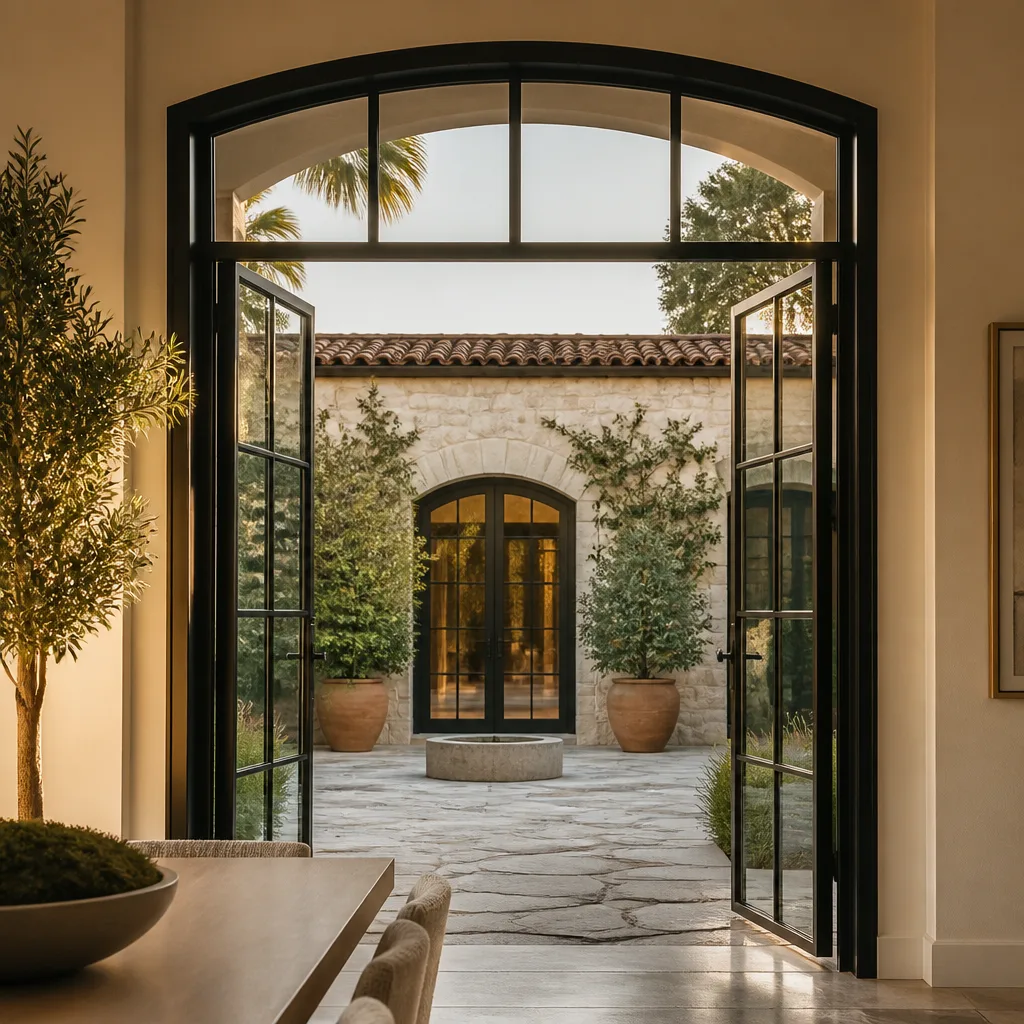
Impact-rated windows and doors in Florida are certified as complete assemblies: glass, frame, glazing system, hardware, and anchorage, tested together to AAMA/WDMA/CSA 101/I.S.2/A440 and Florida Building Code TAS 201, 202, and 203. A common and dangerous misconception is that intact impact glass means intact impact protection. It does not. Several warning signs void the design-pressure rating even with undamaged glass.
Frame corner separation. Impact-rated frames rely on continuous corner construction, either mechanically fastened with corner keys or thermally welded. Separation at any corner, visible as a gap or step at the miter joint, breaks the load path for wind pressure. The frame can rack under load, and the glazing system loses its retention capacity. We’ve documented corner separation on 8-year-old aluminum impact units in Hobe Sound where the corner key had corroded through, a failure mode accelerated by salt-air exposure at the weep channel drain path.
Anchor corrosion or withdrawal. Impact-rated units are anchored to the rough opening with specific fastener types, spacing, and embedment depths. Corrosion of exposed fastener heads, or the “jacking” effect where the fastener backs out under thermal cycling, reduces the anchorage capacity below the tested configuration. The visible sign is a proud fastener head, frame distortion around the fastener, or rust staining on the exterior frame face.
Glazing bead displacement. The glazing bead is a structural component in impact-rated systems, not merely a trim piece. Displacement of 1/8 inch or more, or visible gap between bead and frame leg, indicates that the glass retention system has been compromised. In missile-impact testing, glazing bead engagement is critical to preventing glass departure after the initial impact. A displaced bead means the unit will likely fail the large-missile test even if it passed previously.
Hardware that no longer engages all locking points. Multi-point locks on impact-rated doors and windows distribute wind load across the frame perimeter. If one or more locking points fail to engage, the load concentrates at the remaining points, exceeding their design capacity. The door or sash can bow inward under negative pressure, and the glazing system can fail sequentially.
Documentation for insurance purposes: If you observe any of these conditions, photograph them with a ruler or coin for scale, in direct sunlight to show shadow detail. The photo record is evidence of pre-storm condition. After a storm, insurers may dispute whether the damage was storm-caused or pre-existing. The Sightline Windows & Doors Hobe Sound home process includes this documentation as standard on every visit, not as an extra service.
Documenting Warning Signs for Insurance or Warranty Claims
A photograph that cannot be interpreted is a photograph that cannot be used. For insurance adjusters and warranty administrators, ambiguous images delay or deny claims. The documentation standard we apply on every Sightline visit, and that homeowners can replicate, produces evidentiary photographs.
The five documentation requirements:
- Angle: Photograph perpendicular to the plane of the defect when possible. A 45-degree angle foreshortens dimensions and obscures depth. For frame corner separation, shoot parallel to the joint so the gap width is measurable.
- Lighting: Direct, diffuse daylight, not flash. Flash creates hot spots on glass and erases shadow detail that shows depth. Morning or late afternoon light, with the sun behind you or at 90 degrees, reveals texture. Avoid dappled shade from trees, which creates false patterning.
- Reference object: Include a ruler, coin, or known-dimension object in frame. A quarter (0.955 inch diameter) or standard house key provides immediate scale. State the reference object in any written description.
- Context view: One photograph of the full opening from 6-8 feet, showing the defect location relative to the whole unit. One close-up of the defect itself. The pair prevents disputes about which opening, which defect.
- Date and condition documentation: Photograph a newspaper front page or phone screen showing date, or use camera date stamp. Note weather conditions, particularly recent rainfall, in a written log. Moisture evidence is transient; its documentation is time-sensitive.
For water intrusion specifically, photograph the interior staining pattern before any cleaning or repair. The pattern itself indicates entry point: top-corner staining suggests sealant failure; sill-wide staining with vertical streaks suggests flashing failure. Clean the area and the evidence is lost.
Warranty submissions for manufacturer defects, particularly IGU seal failure, require documentation of installation date and product identification. The product label, typically in the frame head or on the spacer bar edge, contains the NFRC certification number, manufacturer code, and date of manufacture. Photograph this label intact; it is often painted over or removed during finishing.
We provide a documented photo record on every Sightline visit as standard under Haven Clause 4 (Evidence on Every Job). The customer receives the images, not merely access to them.
Common Mistakes to Avoid
- Assuming fogging will “dry out.” The desiccant is saturated and the gas fill is gone. The thermal performance loss is permanent and the mineral etching progresses regardless of weather.
- Applying silicone caulk over failed sealant. New sealant will not adhere to deteriorated substrate. The proper repair requires complete removal, substrate preparation, and compatible material application. A surface patch traps water and accelerates frame corrosion.
- Ignoring hardware stiffness as “normal wear.” Hardware that requires extra force indicates positional misalignment. Continued operation fractures lock cams and elongates mounting holes, converting a $120 adjustment into a $680 sash replacement.
- Pressure-washing to “test” for leaks. High-pressure water forces entry through weep channels, vent slots, and legitimate drainage paths, creating false positives and potentially forcing water into wall cavities that were previously dry.
- Replacing only the visibly failed unit in a matching bank. Windows installed simultaneously in the same exposure degrade on similar timelines. One failed seal in a three-window bank typically indicates that the adjacent units are within 12-18 months of similar failure. Evaluate the bank as a system, not as individual units.
- Accepting verbal warranty terms. The 365-Day Done Right Promise at Sightline is written into the Haven Standard on every job, not offered verbally. Any warranty that cannot be produced in writing is not a warranty.
When to Call a Professional
Call for evaluation when you observe any of the following: fogging between panes that persists more than 48 hours after weather change; frame flex or visible distortion under hand pressure; hardware that no longer engages without manipulation; water staining, damp odor, or efflorescence near any opening; glass rattle in wind or with building vibration; or any visible gap at frame corners or glazing beads on impact-rated units. These symptoms indicate failure mechanisms that progress to structural or weather-barrier breach, and the repair scope expands with delay.
Sightline Windows & Doors Hobe Sound offers free estimates in Hobe Sound. Every estimate begins with a measured survey you keep, and the written quote cannot differ from that document. Call (772) 362-5967 to schedule. For door installation in Hobe Sound or window evaluation, we provide the documented photo record and written scope before any work begins.
Frequently Asked Questions
Surface sealant removal and replacement runs $150-$400 per opening, while failed IGU (fogged glass) replacement ranges $280-$520 for standard sizes and $680-$1,200+ for impact-rated or custom units. Full frame replacement for structural failure starts around $680 for vinyl and $1,400-$2,200 for impact-rated. The specific cost depends on frame material, glazing specification, and access conditions. Call (772) 362-5967 for an exact quote on your opening - estimates are free.
The IGU seal failure is permanent and the gas fill cannot be restored in field conditions. DIY defogging services drill vent holes and apply surface coatings, but this does not restore thermal performance and voids most warranties. Professional IGU replacement, retrofitting a new sealed unit into the existing sash, is the only repair that restores rated performance. We document the before condition and install a new unit with full warranty coverage.
Check for frame corner separation, anchor corrosion or withdrawal, glazing bead displacement of 1/8 inch or more, and hardware that fails to engage all locking points. Any of these conditions voids the assembly’s tested rating even with intact glass. We evaluate impact-rated units against the original design pressure rating and document findings with photographs you can submit to your insurer or HOA.
No. Haven Clause 1 requires that the measured survey and the written quote are the same document. The price we write before any work starts is the price on the final invoice. If concealed damage is found after work begins, we document it, stop work, and present a written amendment before proceeding. No surprises.
Premium vinyl with acrylic capstock and impact-rated aluminum with fluoropolymer finishes typically perform 15-20 years in Hobe Sound’s exposure. Standard vinyl without capstock shows significant degradation at 7-10 years. Salt-air exposure within two miles of open water accelerates hardware corrosion by 30-50% compared to inland timelines. The specific lifespan depends on exposure direction, overhang protection, and original product specification.
Yes. Replacement of impact-rated units and any modification to the rough opening requires Martin County building permit and inspection. We pull permits as standard on every job requiring them, schedule inspections, and provide the passed inspection documentation with your final packet. The permit record also protects your coverage if an insurer disputes post-storm damage attribution.
The Bottom Line
Window and door warning signs are not mysteries. Each observable symptom maps to a specific failure mechanism with a known timeline and repair category. Fogging means permanent seal loss. Frame flex means structural degradation. Hardware misalignment means positional failure. Water staining means either surface sealant breach or systemic flashing failure, distinguishable by methodical testing. Glass rattle means glazing system breakdown. In Hobe Sound’s coastal climate, salt-air and UV acceleration compress inland timelines by years. Document what you find with perpendicular photographs, proper lighting, and reference objects for scale. Then call for evaluation before the repair scope expands. The measured survey you receive and the written price you keep are the foundation of any sound decision.
Written by Sonia Raman, Owner at Sightline Windows & Doors Hobe Sound, serving Hobe Sound since 2012.
Six Reasons Homeowners Choose Sightline Windows & Doors Hobe Sound
Impact systems engineered to design pressures up to +/-100, matched to your wind zone - your openings hold when the storm arrives.
Low-E insulated impact glass from our manufacturer lines commonly cuts monthly cooling bills 20-30%.
Laminated impact glass shuts out up to 40% of outside noise - traffic, neighbors, weather.
Monitoring services run $30-90 a month. Laminated impact glass resists forced entry around the clock, with no subscription.
Florida homeowners average around 25% savings on the windstorm portion of their policy after protecting every opening - some homes qualify for more.
A full impact package upgrades curb appeal, buyer confidence and appraised value in one project.
Other Sightline Windows & Doors Hobe Sound Services
What Neighbors Say About Sightline Windows & Doors Hobe Sound